








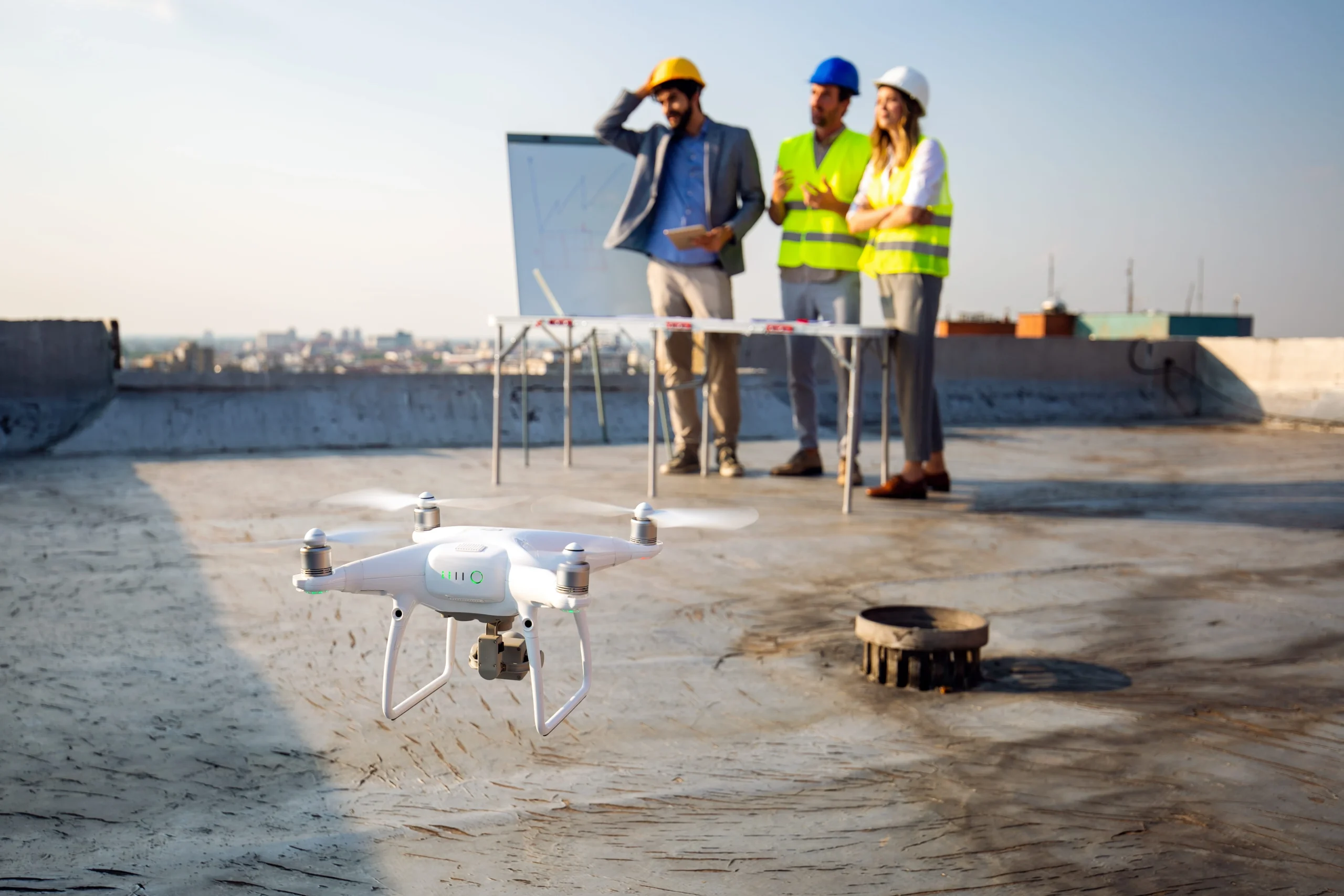
Drones have become a practical tool in modern construction site management, especially in large-scale projects across Illinois and urban hubs like Chicago. What was once considered advanced technology is now a standard part of planning, monitoring, and project reporting in 2026.
By providing real-time aerial data and high-precision site analysis, drones are improving accuracy, safety, and efficiency across all stages of construction.
1. How Drones Are Used in Construction
Drones are primarily used to capture aerial views and collect data that would otherwise require significant time and manpower.
Main applications include:
- Site surveying and mapping
- Construction progress tracking
- 3D modeling and terrain analysis
- Inspection of hard-to-reach areas
This allows teams to make faster and more informed decisions.
2. Improved Site Surveying and Mapping
Traditional surveying methods can be time-consuming and less detailed. Drones provide accurate and high-resolution mapping in a fraction of the time.
Benefits include:
- Faster land assessment
- Precise topographical data
- Reduced manual labor requirements
This improves early-stage project planning significantly.
3. Real-Time Construction Progress Monitoring
Drones allow contractors and project managers to monitor progress without physically visiting every area of the site.
Key advantages include:
- Daily or weekly aerial progress reports
- Easy comparison with project timelines
- Early detection of delays or issues
This ensures better project control and accountability.
4. Enhanced Safety on Construction Sites
Construction sites can be hazardous, and drones help reduce the need for workers to enter dangerous areas.
Safety benefits include:
- Inspection of unstable structures
- Monitoring high-risk zones remotely
- Reducing on-site human exposure to hazards
This leads to fewer accidents and improved compliance.
5. 3D Modeling and Data Visualization
Drones collect data that can be converted into detailed 3D models of construction sites.
These models help with:
- Design validation and adjustments
- Project planning and visualization
- Stakeholder presentations
This improves communication between teams and clients.
6. Faster and More Accurate Inspections
Inspecting roofs, tall structures, and large sites manually can be slow and risky. Drones simplify this process significantly.
Inspection benefits include:
- Quick identification of structural issues
- High-resolution image capture
- Reduced inspection costs
This makes maintenance and quality checks more efficient.
7. Cost Efficiency in Project Management
Although drones require initial investment, they reduce long-term project costs.
Cost-saving factors include:
- Lower labor requirements for surveying
- Reduced rework due to early issue detection
- Faster project completion timelines
This improves overall project profitability.
8. Integration with Construction Software
Drones are often integrated with advanced construction software for better data analysis.
Common integrations include:
- Building Information Modeling (BIM) systems
- Project management platforms
- Mapping and analytics software
This creates a seamless workflow from data collection to decision-making.
9. Environmental and Site Impact Monitoring
Drones also help track environmental impact during construction projects.
They are used for:
- Monitoring soil movement and erosion
- Tracking vegetation and land changes
- Ensuring compliance with environmental regulations
This supports sustainable construction practices.
10. Future of Drone Technology in Construction
Drone technology is expected to become even more advanced with AI integration and automation.
Future developments include:
- Autonomous drones for continuous site monitoring
- AI-powered defect detection systems
- Real-time automated reporting dashboards
Final Thoughts
Drones are transforming construction site management by improving accuracy, safety, and efficiency. In fast-growing markets like Illinois, they are becoming an essential tool for modern construction companies.
As technology continues to evolve, drones will play an even bigger role in shaping how construction projects are planned, executed, and monitored.