










Artificial intelligence is no longer a futuristic idea in construction—it is actively changing how projects are planned, managed, and executed in 2026. From small residential builds to large commercial developments, AI is improving accuracy, reducing costs, and speeding up decision-making across the entire construction lifecycle.
In markets like Chicagoland and across Illinois, where construction demand is high and project complexity continues to grow, AI is becoming a key competitive advantage for contractors and developers.
1. Smarter Project Planning and Design
AI-powered tools are transforming the early stages of construction by improving design accuracy and efficiency.
Key applications include:
- Automated architectural design suggestions
- 3D modeling optimization based on site conditions
- Cost estimation predictions using historical data
This reduces design errors and improves project feasibility from the start.
2. Accurate Cost Estimation
One of the most impactful uses of AI in construction is cost prediction. Traditional estimating methods often miss hidden costs, but AI analyzes large datasets to provide more accurate projections.
Benefits include:
- Real-time material price forecasting
- Labor cost estimation based on project type
- Risk-based budget adjustments
This helps contractors avoid unexpected budget overruns.
3. Improved Project Scheduling
AI tools are making construction timelines more efficient by analyzing workflows and identifying delays before they happen.
Capabilities include:
- Predicting project delays based on weather and supply data
- Optimizing task sequencing
- Resource allocation improvements
This results in faster and more reliable project completion.
4. Enhanced Construction Site Safety
Safety is a critical area where AI is making a major difference. Intelligent systems can now monitor job sites and detect risks in real time.
Key features include:
- Computer vision systems detecting unsafe behavior
- Wearable devices tracking worker safety conditions
- Automated hazard alerts
This significantly reduces accidents and improves compliance.
5. AI in Equipment and Machinery Management
Construction equipment is becoming smarter through AI integration.
Benefits include:
- Predictive maintenance alerts
- Reduced machine downtime
- Improved fuel and energy efficiency
This increases productivity and reduces operational costs.
6. Better Resource Management
AI helps construction companies manage materials, labor, and equipment more efficiently.
It enables:
- Real-time inventory tracking
- Waste reduction strategies
- Optimized material ordering schedules
This ensures fewer delays and less material waste.
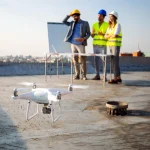
7. AI in Site Monitoring with Drones
AI-powered drones are now widely used for construction site monitoring and data collection.
Applications include:
- Progress tracking through aerial imaging
- Site mapping and surveying
- Identifying structural issues early
This improves accuracy and saves time compared to manual inspections.
8. Quality Control and Error Detection
AI systems can detect construction defects faster than human inspection methods.
They help identify:
- Structural inconsistencies
- Material defects
- Design deviations
This ensures higher construction quality and fewer rework costs.
9. Data-Driven Decision Making
Construction companies are increasingly relying on AI-driven insights to make better business decisions.
These insights include:
- Market demand forecasting
- Project profitability analysis
- Risk assessment reports
This leads to smarter business planning and investment strategies.
10. Future of AI in Construction
The role of AI in construction is expected to expand rapidly in the coming years. As technology advances, AI will become more integrated into every stage of construction.
Future developments include:
- Fully automated construction planning systems
- AI-managed job sites with minimal human intervention
- Advanced predictive building maintenance systems
Final Thoughts
AI is fundamentally reshaping the construction industry by improving efficiency, safety, and decision-making. In fast-growing regions like Illinois, where construction demand continues to rise, AI adoption is becoming essential for staying competitive.
Companies that embrace AI-driven tools today will lead the industry tomorrow with faster, safer, and more cost-effective construction practices.